What Whole-Structure Fumigation Actually Involves (and When West Tennessee Homes Need It)
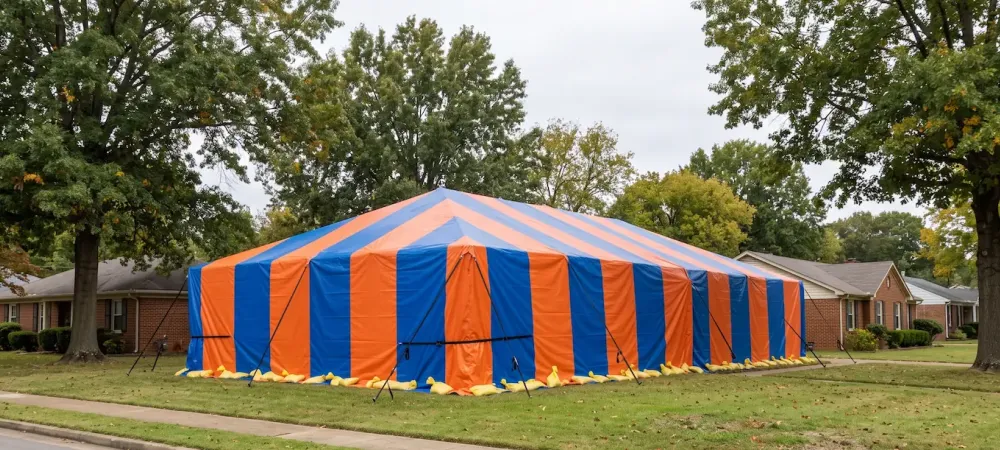
Tenting a house looks alarming from the street, and the idea of an entire structure filled with gas understandably worries a lot of homeowners. Fumigation isn't the first move for most West Tennessee pest problems, but when termites, bed bugs, or other pests have spread too deep into a home's walls and framing for spot treatment to reach, it's often the only option that actually finishes the job. Knowing what the process involves, and what it doesn't, makes the decision a lot less intimidating.
Quick Answer
Whole-structure fumigation covers a home with a sealed tent and fills it with a gas, almost always sulfuryl fluoride, that penetrates walls, wood, and every crack in the structure to reach pests standard treatments can't get to. The full process, from prep through re-entry, typically runs two to three days, and federal law requires the air inside to test below 1 part per million before anyone is allowed back in (2026). It's reserved for infestations too widespread or too deeply embedded for localized treatment, not a routine first step.
What Fumigation Is and Why It's Sometimes Necessary
Sulfuryl fluoride is "the only fumigant registered for use in residential structures" in the United States, according to the Environmental Protection Agency, and it's approved to control termites, bed bugs, powderpost beetles, and several other pests that hide deep inside a home's framing. Once released inside a sealed structure, the gas "spreads out and seeps into cracks and pores," reaching wall voids, wood grain, and other spaces a liquid treatment or bait system physically cannot penetrate, according to the National Pesticide Information Center, a cooperative fact-sheet program between Oregon State University and the EPA.
Most West Tennessee termite problems are handled with soil treatments or bait systems, not fumigation, since the region's dominant subterranean termites live in the ground and travel up into a structure rather than living entirely inside the wood. Fumigation becomes the right call when an infestation, whether termites, bed bugs, or wood-boring beetles, has spread so far into the walls and framing that a technician can no longer treat it room by room. It's a last-resort tool for a specific problem, not a routine service.
Myth to correct: a lot of homeowners assume a fumigated house stays "toxic" or unsafe to live in afterward. It doesn't. Sulfuryl fluoride leaves no residue once it's aerated out of the structure, and federal regulations require a licensed technician to test the air with a clearance device and confirm it's below 1 part per million before anyone is allowed back inside.
How the Fumigation Process Works
A whole-structure fumigation follows the same sequence regardless of which pest triggered it, though timing shifts a little based on the size of the home and the weather.
- Inspection and prep list. A technician inspects the structure to confirm fumigation is the right call and gives the homeowner a checklist of what needs to happen before the tenting crew arrives.
- Remove or seal food, medicine, and plants. Anything not in original, factory-sealed packaging has to be removed or double-bagged in fumigation-rated bags, and houseplants and pets need to leave the property entirely, including fish tanks.
- Arrange 2 to 3 nights of alternate housing. Everyone, including pets, has to be out of the structure for the full treatment and aeration window.
- Tenting. Large tarps are sealed over the entire structure, and gas service to the home is typically shut off before the fumigant is introduced.
- Gas exposure. The fumigant fills the structure and holds for roughly 24 hours, giving it time to penetrate wall voids, attic spaces, and wood framing.
- Aeration and clearance testing. The tarps come off and the home is ventilated for several hours, after which a technician tests the air with a clearance device. Re-entry isn't allowed until the reading is below 1 part per million.
Fumigation vs. Localized Treatment
Localized treatment, whether that's soil treatment for subterranean termites, bait stations, or spot spraying for bed bugs, works well when the infestation is contained to an area a technician can access directly. It's less disruptive, doesn't require leaving the home, and is the standard first approach for most pest problems in West Tennessee. The tradeoff is reach: a wall void, a sealed piece of framing, or a piece of furniture deep in a room can be out of range for a targeted treatment.
Fumigation solves that reach problem by filling the entire structure at once, but it comes with real tradeoffs of its own. It requires vacating the home for several days, doesn't leave any residual protection once it's aerated out, and needs a follow-up prevention plan to keep new pests from moving back in. For most homes, localized treatment solves the problem. Fumigation gets called in specifically when it can't.
Before Your Home Is Tented: A Checklist
- Remove all food, beverages, and medicine that aren't in original, factory-sealed containers, or double-bag them in fumigation-rated bags
- Move houseplants off the property, not just outside the structure
- Arrange care and boarding for pets, including turning off and covering or removing fish tanks
- Coordinate a gas service shut-off with your utility company ahead of the appointment
- Leave interior doors, cabinets, and closets open so the gas can circulate fully
- Confirm lodging for your family for 2 to 3 nights before the crew arrives
- Let neighbors know the date, since the tented structure needs to stay off-limits to anyone but the fumigation crew
When to Call a Professional
Fumigation isn't a DIY-adjacent decision the way sealing cracks or setting bait traps can be. Sulfuryl fluoride is a restricted-use pesticide, meaning only a certified, licensed applicator can legally purchase or apply it, and the clearance testing that confirms it's safe to re-enter has to be done by a trained technician with calibrated equipment. If a technician has told you a termite or bed bug infestation has spread too far into your home's framing for standard treatment, or if repeated localized treatments haven't resolved the problem, that's the point to have a real conversation about whether fumigation is the right next step for your home in Jackson, Memphis, Dyersburg, or anywhere else in West Tennessee.
Not sure whether your situation calls for fumigation or a more localized treatment? Call Okeena Termite and Pest Control at 731-285-4982 and we'll walk your home through an honest inspection before recommending either one.
Sources
-
United States Environmental Protection Agency. "EPA Announces Next Steps to Protect People from Sulfuryl Fluoride Used to Fumigate Residential Structures." EPA, 30 July 2024, www.epa.gov/pesticides/epa-announces-next-steps-protect-people-sulfuryl-fluoride-used-fumigate-residential.
-
National Pesticide Information Center. "Sulfuryl Fluoride General Fact Sheet." Oregon State University and U.S. Environmental Protection Agency, npic.orst.edu/factsheets/sfgen.html.
-
United States Environmental Protection Agency. "Sulfuryl Fluoride Clearance Devices." EPA, www.epa.gov/ingredients-used-pesticide-products/sulfuryl-fluoride-clearance-devices.