Fall Invaders in West Tennessee: Why Stink Bugs, Boxelder Bugs, and Lady Beetles Show Up Every Year
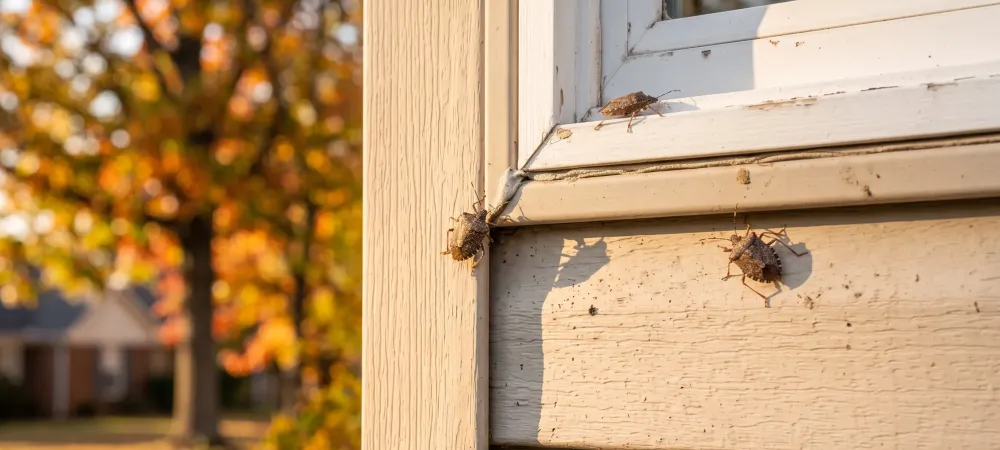
Every fall, the same uninvited guests show up on the sunny side of West Tennessee homes. Stink bugs, boxelder bugs, and Asian lady beetles gather by the hundreds on siding, windows, and porches, then look for a way inside. They aren't there to eat your food or your house. They're there because your house is warmer than the woods, and that's exactly what makes fall invader season predictable and preventable if you seal your home before the first cold snap.t
Quick Answer
Stink bugs, boxelder bugs, and Asian lady beetles are called fall invaders because they move toward buildings in September and October, looking for cracks and gaps to sleep through winter. They don't bite, sting, or damage wood, but they can leave stains and odors when crushed and can slip inside by the hundreds through unsealed gaps. Sealing entry points before the first frost, which lands in mid-October in Jackson and early November in Memphis, is the most effective way to keep them out (2026).
Why These Bugs Show Up Every Fall
Fall invaders aren't wandering in by accident. As temperatures drop, stink bugs, boxelder bugs, and Asian lady beetles go looking for a warm, dry place to spend the winter, and a house looks a lot better than a hollow log. The brown marmorated stink bug is "often a nuisance to homeowners in the fall while seeking protected locations for overwintering," according to a University of Tennessee Institute of Agriculture Extension publication (Halcomb et al.), and boxelder bugs and Asian lady beetles follow the same pattern, gathering first on sun-warmed exterior walls before pushing through any crack they can find.
Myth to correct: a lot of homeowners assume boxelder bugs and stink bugs are chewing through wood or wiring once they're inside. They aren't. These are nuisance pests, not structural pests. The real cost isn't damage, it's the sheer number of bugs that can pile up in an attic, wall void, or window frame over a single season if the entry points aren't sealed.
How to Seal Your Home Against Fall Invaders
Timing matters more than most homeowners expect. Fall invaders start scouting for shelter well before the weather actually turns cold, so the sealing work needs to happen while it's still warm outside. University of Kentucky Cooperative Extension research points to sealing as the most effective way to reduce how many of these bugs make it indoors in the first place.
- Inspect your home's sunny side first. Stink bugs, boxelder bugs, and lady beetles gather on south- and west-facing walls before they move indoors, so check siding, soffits, and window frames on those sides for clusters.
- Seal cracks around windows and doors. A gap as small as one-eighth of an inch is wide enough for these pests to squeeze through, so caulk gaps around frames and trim.
- Replace worn weather stripping and door sweeps. A door that doesn't seat tightly against the threshold is a common entry point found during fall inspections.
- Screen or seal attic and soffit vents. Fine mesh screening keeps bugs out without blocking airflow your attic needs.
- Caulk around utility penetrations. Pipes, cables, and dryer vents that pass through exterior walls almost always leave a gap behind them.
- Check your crawl space. An open or poorly sealed crawl space gives fall invaders, along with rodents and moisture, a direct route into your home's lower framing. If your crawl space has gaps, vents without screens, or standing moisture, crawl space encapsulation closes that entry point for good.
DIY Sealing vs. Professional Pest Control
Caulk and weather stripping handle the gaps you can see, but they won't touch bugs that are already established in a wall void or attic space before the first cold snap arrives. That's the limit of DIY: it's a good first line of defense for prevention, not a fix once a population has moved in. A vacuum with a stocking taped inside the hose can remove bugs that have already gotten indoors, but it does nothing for the ones still queuing up outside.
Professional pest control adds a perimeter treatment timed to when fall invaders are actively moving toward the structure, along with an inspection that catches entry points a homeowner might miss, like a gap behind fascia board or a vent screen torn from the inside. For a home that sees the same fall invader problem year after year, a quarterly pest control plan handles this alongside the rest of the pest pressure West Tennessee homes see across the year, rather than treating fall as a one-off scramble.
Fall Pest Prevention Checklist
- Seal cracks and gaps around windows, doors, and siding before late September
- Replace or repair damaged window screens
- Install door sweeps on exterior doors, including garage entry doors
- Trim tree branches and shrubs away from exterior walls, since bugs often stage on nearby vegetation before moving to the house
- Screen attic, soffit, and crawl space vents with fine mesh
- Caulk around pipes, wiring, and dryer vents where they pass through exterior walls
- Address any rodent entry points at the same time, since mice and rats look for the same gaps fall invaders do
When to Call a Professional
A handful of stink bugs on a windowsill is a DIY problem. Hundreds of them gathered on a wall, or a home that deals with the same invasion every October, points to entry points that need a trained eye and a treatment timed to the season. This is especially true for older homes in Jackson, Memphis, and Dyersburg, where original construction and settling can leave gaps that are hard to spot without an inspection. Okeena's general pest control service covers fall invaders as part of a quarterly plan, so the same visit that handles carpenter ants in summer can be timed to seal the house up before fall invaders start moving in.
Dealing with stink bugs, boxelder bugs, or lady beetles piling up at your place, or just not sure what's getting in and where? Call Okeena Termite and Pest Control at 731-285-4982 and we'll help you figure out the right next step before the first frost hits.